How to Help Kids With Bedtime Nightmares Using Imagery Rehearsal
If your child wakes scared from nightmares or dreads bedtime, you can help during the day—not only at night. Imagery rehearsal (also called dream rescripting) means your child describes the scary dream while they feel safe, you invent a playful new ending together, and you rehearse that new version so it becomes the story their mind expects. Pair that daytime practice with a predictable, low-stimulation bedtime routine and a calm audio story. Avoid screens in the hour before sleep.
Why bedtime nightmares feel so big
Nightmares can feel vivid and real to a young child. Cleveland Clinic notes that nightmares can be really scary for kids and that it helps to remind them during the day that dreams aren't real.
Fear of the dark and bedtime anxiety often travel with nightmares. Children's Hospital Colorado describes imagination as a tool parents can use to manage fear—helping kids feel more in control and confident. Parents.com similarly recommends acknowledging and validating the fear rather than dismissing it.
If your child's main worry is the dark room itself—not a recurring dream—see our separate plan for bedtime anxiety and fear of the dark.
A predictable routine also lowers anxiety. Michigan Medicine highlights that sticking to a regular bedtime routine—and knowing what to expect—can reduce anxiety and help children feel safe and relaxed.
What imagery rehearsal is (in plain words)
Imagery rehearsal / dream rescripting is a daytime technique: if a child has a recurring nightmare, ask them to describe it, then help them invent a new, positive ending, and rehearse that "new dream" together during the day.
You are not arguing with the monster at 2 a.m. You are rewriting the script when your child is calm, so bedtime becomes practice of a safer story—not a battle with the old one.
A simple daytime routine (ages 1–8)
Do this during the day, when your child feels safe—not in the dark at bedtime.
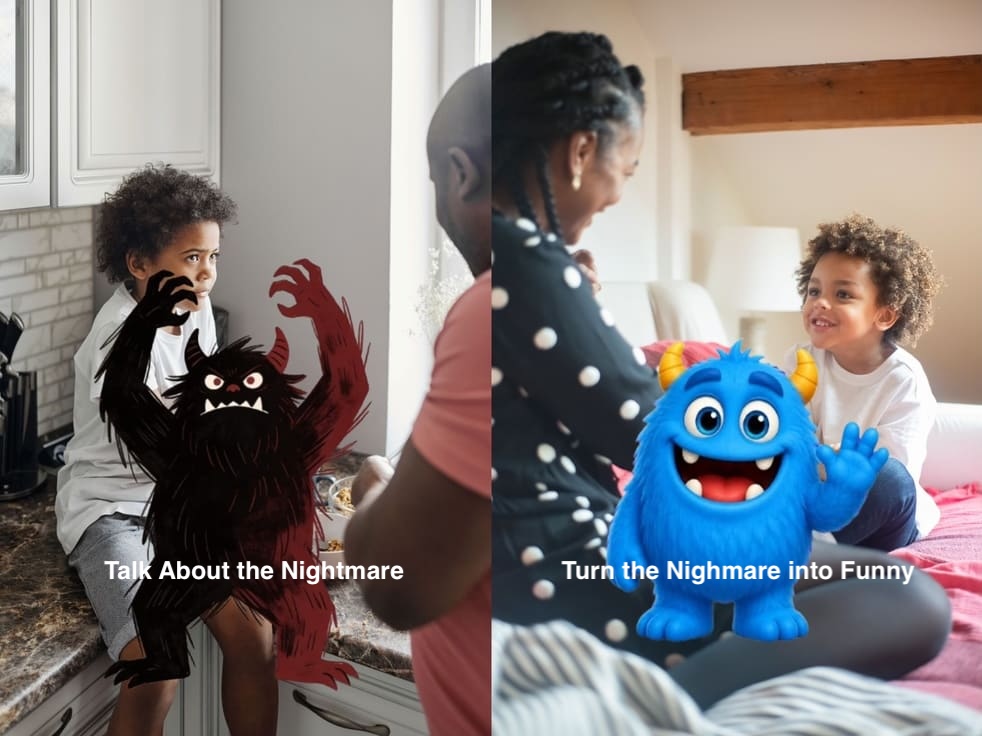
- Name it gently. "You had a scary dream about ___. Dreams aren't real, and you're safe with me."
- Let them tell the dream once. Keep it short. Stop if they get overwhelmed; come back later.
- Invent a playful new ending together. The monster slips on a banana peel. The shadow becomes a friendly dog. The scary door opens to a picnic. Humor and agency beat "fighting harder."
- Rehearse the new version. Draw it, act it for 30 seconds, or retell it two or three times. The goal is a clear, silly picture they can call up later.
- Optional: turn the new ending into a bedtime story. At night, a calm narrator can tell their rewritten story—same characters, new ending—so the safer version is the last thing they hear.
- Keep sessions short for toddlers (a few minutes). For older preschoolers, a little more detail is fine.
A preschooler kept waking from the same dream about a giant squid under the bed. In the afternoon, he and his dad drew the squid slipping on a banana peel and called it Silly Squid. That night, a calm audio story retold the silly version, and by morning he said the squid had only come to dance.
What to do at bedtime (without screens)
Imagery rehearsal works best next to a boringly consistent night.
- Same order every night (bath → pajamas → story → lights down).
- Quiet play in the last hour; dim lights.
- No screens in the bedroom in the hour before sleep for young kids—visual stimulation and blue light can delay sleep onset. Pediatric guidance commonly recommends screens off before bed.
- Prefer audio-only stories so your child can close their eyes. Audio storytelling keeps the ritual without the "I want to see the page" negotiation.
If they wake from a nightmare: comfort first, brief reassurance, back to bed. Save the full rewrite for daytime.
When to get extra help
Most childhood nightmares improve with routine, daytime reassurance, and rescripting. Seek a pediatrician or child sleep specialist if nightmares are frequent and severe, your child cannot function by day, or you see signs of trauma, breathing problems in sleep, or sudden behavior changes. This page is parenting guidance, not medical care.
How StoryRadio fits
You can do imagery rehearsal with paper and your own voice. Some families also want a hands-free, screen-free story at lights-out.
StoryRadio is a free, audio-only bedtime story app for ages 1–8. Parents can use daytime "Rewrite the Night" style storytelling—describe what frightened the child, craft a playful new ending—and hear it narrated in a calm voice at bedtime, with continuous playback like a vintage radio and zero screen time after the first tap. Stories adapt to age and interests, and there are no ads.
The free tier includes published daily minimums. An optional membership is planned for later to add more capacity and library content without removing the free floor.
Use it only if it fits your routine. The technique above works with or without an app.
Related guides
Sources
- SleepSavvy Kids — nightmares and imagery rescripting
- Cleveland Clinic — nightmares in children
- Children's Hospital Colorado — fear of the dark
- Parents.com — helping kids with fear of the dark
- Michigan Medicine — worry, anxiety, and falling asleep
- Happiest Baby — toddler sleep / quiet hour
- Blueberry Pediatrics — toddler bedtime routine
- Gramms — audio-only stories for toddlers
- StoryRadio